
A sump pump can fail quickly, and when it does, basement water damage can happen fast.
Heavy rain, saturated soil, power outages, clogged discharge lines, old pumps, and stuck float switches can all cause water to overflow from the sump pit and spread across the basement. What starts as a small puddle can quickly reach flooring, drywall, stored belongings, and hidden areas where moisture can lead to mold.
Bee Dry Restoration of Cleveland helps homeowners respond quickly after sump pump failure, basement flooding, and moisture damage with professional water extraction, drying, and restoration support.
What a Sump Pump Does
A sump pump removes water that collects in a sump pit, usually in a basement or crawl space. When the water level rises, the pump turns on and sends that water through a discharge line away from the home.
When it works, you barely notice it. When it fails, the sump pit can overflow and send water into the basement.
That is why a sump pump is one of the most important defenses against basement flooding and water damage.

Why Sump Pump Failure Leads to Basement Flooding
A sump pump system is built to move water out faster than it enters.
When the system stops working, water keeps coming in but has nowhere to go. The sump pit fills, then spills over. From there, water can move quickly across concrete, under flooring, into wall cavities, behind baseboards, and around stored belongings.
The damage depends on how long the water sits and how far it spreads.
Basement flooding from sump pump failure can affect:
- Carpet and carpet padding
- Finished flooring
- Drywall and insulation
- Baseboards and trim
- Wood framing
- Furniture
- Cardboard boxes
- Stored belongings
- Electrical components
- HVAC equipment
- Indoor air quality
Even if the water looks clean, it can still create serious moisture problems. Wet building materials can support mold growth if they are not dried quickly and thoroughly.
Common Causes of Sump Pump Failure
Sump pumps can fail suddenly during a storm or slowly over time from age, debris, poor maintenance, or installation issues. Common causes include:
- Power outages: Most primary sump pumps need electricity. If the power goes out during heavy rain and there is no battery backup or generator-safe setup, the pump cannot run.
- Float switch problems: The float switch tells the pump when to turn on. If it gets stuck, blocked by debris, tangled, or positioned incorrectly, the pump may not activate even if the motor still works.
- Clogged discharge line: The discharge line carries water away from the home. Dirt, gravel, leaves, ice, sediment, or debris can block the line and cause water to stay in the pit or flow back.
- Frozen discharge pipe: In cold weather, a discharge pipe can freeze if it holds standing water, is poorly sloped, or is exposed to freezing temperatures. When this happens, the pump may run but water cannot exit properly.
- Bad check valve: A check valve prevents pumped water from flowing back into the sump pit. If it fails or is installed incorrectly, the pump may cycle too often and wear out faster.
- Pump overload during heavy rain: Sometimes the pump works but cannot keep up with incoming water from heavy rain, snow melt, high groundwater, or poor foundation drainage.
- Old or worn-out pump: Many sump pumps last around 7 to 10 years under normal conditions, but heavy use, frequent cycling, dirty water, or poor maintenance can shorten the lifespan.
- Debris in the sump pit: Mud, gravel, loose dirt, toys, or trash can block the intake, jam the float switch, damage the impeller, or reduce pump performance.
- Failed battery backup: A backup system only works if the battery is charged and healthy. Old, corroded, or dead batteries can leave the pump unprotected during a power outage.
A sump pump can fail because of power loss, blocked water flow, switch problems, pump age, poor maintenance, or an overwhelmed system. Regular testing and maintenance can help prevent basement flooding.
Warning Signs Your Sump Pump May Be Failing
A sump pump often gives warning signs before it fails completely.
Pay attention to these symptoms:
- The pump runs constantly
- The pump does not turn on when water rises
- The pump cycles on and off too often
- The pump makes grinding, rattling, humming, or banging noises
- The pit fills higher than normal
- Water drains slowly from the pit
- The pump vibrates heavily
- The breaker or GFCI outlet trips
- The backup alarm sounds
- The basement smells musty
- Water appears near the sump pit
- The pump is older than 7 to 10 years
- The discharge line has little or no water flow outside
Do not ignore these signs. A sump pump problem is much easier to handle before the basement floods.
How to Test Your Sump Pump
A simple water test can tell you whether your pump is responding properly.
Pour a bucket of water into the sump pit until the float rises. The pump should turn on automatically, remove the water, and shut off when the water level drops.
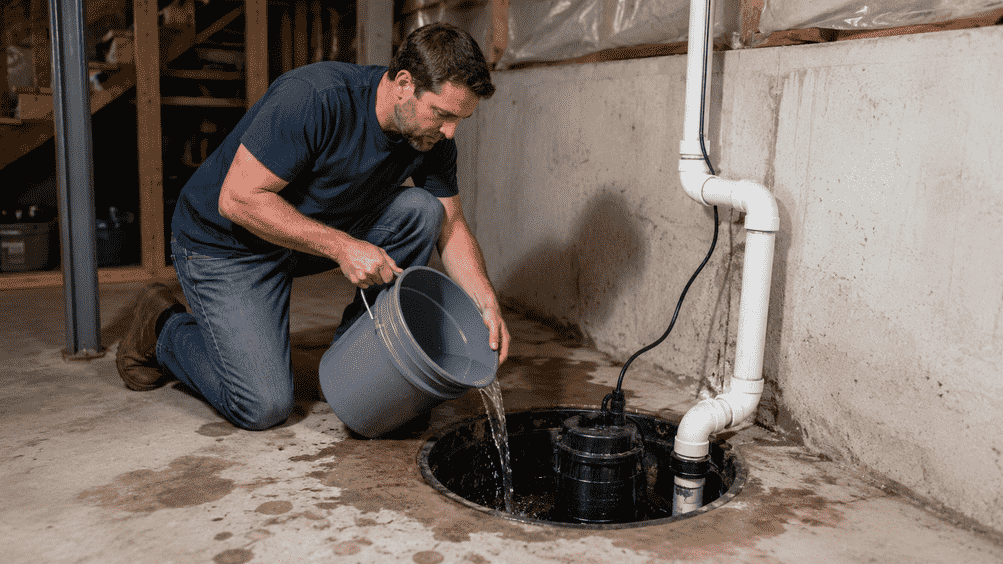
During the test, watch for:
- Fast startup
- Smooth pump operation
- Good discharge flow outside
- No strange noises
- No water flowing back into the pit
- Float moving freely
- Pump shutting off properly
If the pump hums but does not move water, cycles repeatedly, fails to start, or runs longer than expected, it may need repair or replacement.
How to Prevent Basement Flooding From Sump Pump Failure
You cannot control every storm, but you can reduce the risk of basement flooding by keeping your sump pump system ready.
- Install a backup sump pump: A battery backup, water-powered backup, secondary electric pump, or smart monitored system can help protect the basement if the primary pump fails or loses power.
- Use a high-water alarm: A high-water alarm alerts you when water rises too high in the sump pit, giving you time to act before the pit overflows.
- Keep the discharge line clear: Make sure the discharge pipe sends water away from the foundation and is free of leaves, mud, ice, debris, or animal nests.
- Clean the sump pit: Remove loose dirt, gravel, mud, and debris that could block the pump intake or stop the float switch from moving freely.
- Check the power source: Confirm the pump is plugged in, the outlet works, and the breaker has not tripped. Avoid using extension cords for permanent sump pump operation.
- Improve drainage around the foundation: Keep gutters clean, extend downspouts away from the home, correct low spots, and make sure soil slopes away from the foundation.
- Test before heavy rain: Pour water into the sump pit to make sure the pump turns on, removes water, and shuts off properly before storm season or heavy rainfall.
A backup pump, clear discharge line, clean sump pit, working power source, and regular testing can greatly reduce the risk of basement flooding from sump pump failure.
When to Replace Your Sump Pump
A sump pump should be replaced when it is no longer reliable, especially if your basement depends on it for flood protection.
Consider replacement if:
- The pump is around 7 to 10 years old
- It fails a water test
- It runs constantly
- It short cycles
- It makes loud grinding or rattling noises
- It hums but does not pump water
- It trips the breaker or GFCI repeatedly
- The float switch keeps sticking
- It cannot keep up during storms
- It has visible rust or corrosion
- It has already failed once during heavy rain
Do not wait for a complete failure if your basement is finished or stores valuable belongings. Replacing an unreliable pump is usually cheaper than cleaning up a flooded basement.

What Happens After a Basement Flood?
Once water enters the basement, damage can spread quickly. Carpet padding absorbs moisture, drywall pulls water upward, wood trim can swell, and water can move under flooring or into hidden cracks.
Even after standing water is removed, moisture may remain inside walls, floors, and building materials.
That is why basement flood cleanup requires more than towels, fans, or a shop vacuum. Professional cleanup focuses on water extraction, moisture detection, structural drying, odor control, and preventing secondary damage like mold growth.
What to Do Right Away After Sump Pump Failure
If your sump pump fails and your basement floods, take these steps:
- Put safety first: Avoid standing water if it is near outlets, appliances, extension cords, HVAC equipment, or the electrical panel. Call a professional if you are unsure.
- Stop more water if possible: Avoid running appliances that drain water, such as the washer or dishwasher, until the sump pump or drainage issue is fixed.
- Document the damage: Take photos and videos of standing water, wet flooring, damaged belongings, walls, and the sump pump area before cleanup begins.
- Remove standing water fast: The sooner water is extracted, the better. Standing water can damage flooring, drywall, furniture, and stored items.
- Dry the basement properly: Fans alone may not be enough. Proper drying may require air movers, dehumidifiers, and moisture checks.
- Watch for mold risk: Wet materials should be dried quickly. Moisture can stay hidden behind walls, under flooring, and around baseboards even after the surface looks dry.
Can Sump Pump Failure Cause Mold?
Yes. Sump pump failure can lead to mold if water is not removed and materials are not dried quickly.
Mold can grow on:
- Drywall paper
- Wood framing
- Carpet backing
- Carpet padding
- Baseboards
- Cardboard boxes
- Stored furniture
- Insulation
- Ceiling tiles
- Dust and organic debris
A musty smell after a basement flood is a warning sign. It may mean moisture is still trapped somewhere, even if the visible water is gone.
Why Call Bee Dry Restoration of Cleveland After Sump Pump Failure?
When a sump pump fails, removing the visible water is only part of the job. Moisture can stay trapped under flooring, behind baseboards, inside drywall, and around stored items, creating more damage if it is not dried properly.
Bee Dry Restoration of Cleveland helps homeowners with basement water extraction, sump pump failure cleanup, structural drying, moisture inspection, odor control, and mold prevention after water damage.
If your basement floods after a sump pump failure, contact Bee Dry Restoration for fast cleanup, drying, and restoration support.
Prevention Checklist for Homeowners
Use this checklist before storm season:
- Test the sump pump with a bucket of water
- Confirm the float switch moves freely
- Clean debris from the sump pit
- Check the discharge line outside
- Make sure water drains away from the foundation
- Test the backup pump
- Check battery backup status
- Install or test a high-water alarm
- Inspect the check valve
- Listen for strange noises
- Replace an older or unreliable pump
- Keep gutters and downspouts clear
- Store basement items off the floor
- Keep valuables in waterproof bins
Small maintenance steps can prevent major basement water damage.
Final Thoughts
Frequently Asked Questions
A sump pump failure can flood a basement quickly, especially during heavy rain, snow melt, or periods of high groundwater. Power outages, stuck float switches, clogged discharge lines, frozen pipes, worn pumps, bad check valves, debris, and failed backup batteries are all common reasons a sump pump stops working when you need it most.
The best way to prevent basement flooding is to stay ahead of the problem. Test your pump, keep the sump pit clean, check the discharge line, use a backup system, install a high-water alarm, and replace an aging pump before it fails.
If your sump pump has already failed and your basement is wet, fast cleanup matters. Bee Dry Restoration provides basement water extraction, drying, moisture inspection, and water damage restoration services throughout Northeast Ohio.
Contact Bee Dry Restoration of Cleveland today for professional sump pump failure cleanup and basement flooding restoration support.
Warning signs include strange noises, constant running, short cycling, humming without pumping, water rising too high in the pit, breaker trips, backup alarms, musty odors, or water appearing around the sump pit.
Test your sump pump before heavy rain seasons, before spring thaw, and anytime you suspect a problem. Pour water into the pit and confirm the pump turns on, removes water, and shuts off properly.
Many sump pumps last around 7 to 10 years under normal conditions, but heavy use, poor maintenance, debris, frequent cycling, and installation issues can shorten lifespan.
Yes, if the pump is old, unreliable, noisy, short cycling, failing tests, or unable to keep up during storms. Replacing it early is often less expensive than cleaning up a flooded basement.
A sump pump often fails during heavy rain because that is when it works the hardest. Common reasons include power outages, an overwhelmed pump, a stuck float switch, a clogged discharge line, a failed check valve, or a pump that is too old to keep up with incoming groundwater.
If your sump pump is running but water is not leaving the pit, the discharge line may be clogged, frozen, disconnected, or blocked outside. The pump may also have a damaged impeller, bad check valve, or internal motor issue that prevents proper water movement.
Not always. Sump pump water may start as groundwater, but once it enters the basement, it can pick up dirt, bacteria, chemicals, debris, and contaminants from flooring, storage items, or building materials. Basement water should be removed quickly and the affected area should be dried properly.
Coverage depends on your policy. Many standard homeowners policies do not automatically cover sump pump failure or water backup unless you have a sump pump backup or water backup endorsement. Check your policy or ask your insurance agent before a loss happens.