
Sewer Backup Common Claims
A sewer backup is contaminated water damage that needs fast, careful cleanup. Bee Dry Restoration of Cleveland helps Northeast Ohio property owners with sewage cleanup, emergency mitigation, contaminated material removal, disinfection, odor control, drying, documentation, and reconstruction planning.
Sewer Backup Claims, Explained Simply
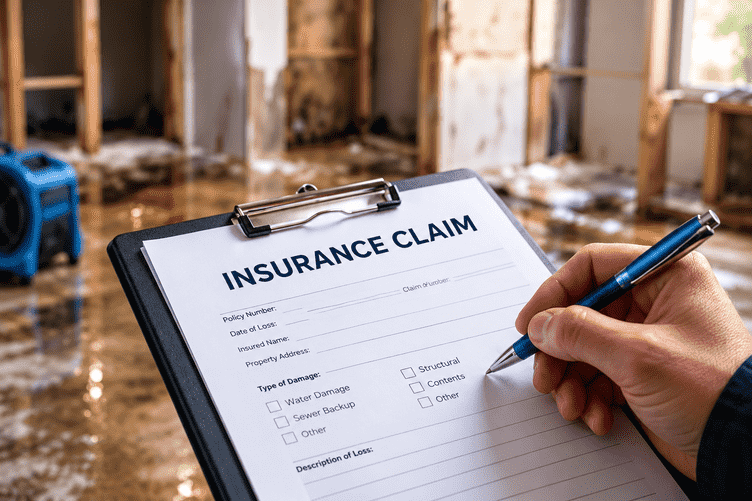
A sewer backup is contaminated water damage that needs fast, careful cleanup. Coverage may depend on your policy, water-backup endorsement, limits, cause of loss, and how the damage is documented.
Every situation is different.
Bee Dry helps document the loss, clean affected areas, and move the restoration process forward.
Protect the Area Before Cleanup Starts
Sewer water can contain harmful contaminants. Avoid direct contact, keep children and pets away, and do not enter areas with standing water if electrical hazards may be present.
What to Do After a Sewer Backup
Stop Using Plumbing
Avoid running sinks, toilets, showers, laundry, or appliances while the system is backing up.
Call the Right Help
Contact a plumber or sewer professional for the source, then call Bee Dry for cleanup and mitigation.
Document the Damage
Take photos and videos of affected rooms, drains, flooring, walls, contents, and standing water when safe.
Start Cleanup Quickly
Professional extraction, contaminated material removal, cleaning, disinfection, odor control, and drying may be needed.
Why This Loss Is Different
Sewer backup is not the same as a typical water loss. It often contains contaminated water that requires special handling and thorough cleanup.
Contaminated Water
Contains bacteria, viruses and harmful pathogens.
Damaged Materials
Carpet, drywall and flooring often cannot be salvaged.
Specialized Cleanup
Requires professional equipment and protocols.
Health Risks
Serious risk to indoor air quality can develop if not addressed.
Odor Control
Persistent odors require advanced treatment.
How Insurance May Review Sewer Backup Damage
Coverage depends on your policy, endorsement limits, cause of loss, and documentation. These are common details your insurance carrier may review after a sewer backup.
Whether your policy includes sewer backup or water-backup coverage
The cause of the backup, such as a clogged line, drain issue, or system failure
The extent of damage to flooring, drywall, contents, and other materials
Photos, moisture records, cleanup notes, and restoration documentation
How quickly the loss was reported and mitigation work began
Real-World Example
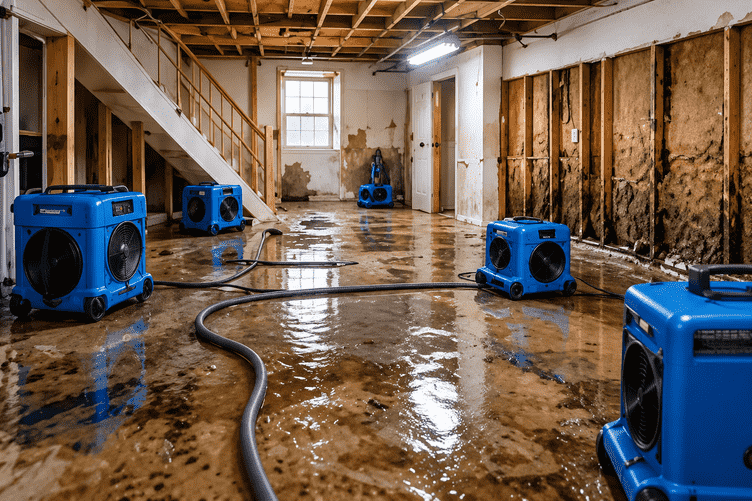
A Cleveland homeowner experienced a sewer backup after heavy rain. Here’s how the claim process typically looked:
Day 1 — Report the Loss
They contacted their insurance company and Bee Dry Restoration of Cleveland.
Day 1–2 — Mitigation
Our team removed contaminated water, cleaned affected areas, and began drying.
Day 3–5 — Cleaning & Drying
We deodorized, disinfected, and monitored moisture until the space was ready for repairs.
Day 5+ — Restoration
Repairs began to restore the home to its pre-loss condition.
Sewer Backup Is Not the Same as Flood Damage
Sewer backup and flood damage are not always reviewed the same way. The source of the water can affect how the claim is handled.
These details matter because coverage can depend on where the water came from, how it entered, and what materials were affected.
How Bee Dry Helps With Sewer Backup Claims
Bee Dry Restoration of Cleveland handles the restoration side after sewer backup damage, from cleanup and drying to documentation and repair planning.
Extract
Sewage water extraction and affected-area containment.
Remove
Removal of contaminated porous materials when needed.
Clean
Cleaning, disinfection, and odor control for affected surfaces.
Dry
Dehumidification, drying equipment, and moisture inspections.
Document
Photos, moisture readings, mitigation notes, and damage documentation.
Plan Repairs
Mitigation estimating, reconstruction planning, and repair coordination.
Bee Dry does not decide coverage, approve claims, deny claims, guarantee payment, or repair the sewer line itself.
Sewer Backup Is Not the Same as Flood Damage
Sewer backup and flood damage can be reviewed differently because the source of the water matters.
A claim may be viewed differently if the water came from:
- Sewer or drain backup
- Basement floor drain backup
- Sump pump or ejector system issue
- Groundwater or outside surface water
- Blocked main sewer line
These details can affect how the claim is reviewed, what coverage may apply, and what documentation is needed.
Bee Dry’s Role in Sewer Backup Common Claims
Bee Dry Restoration of Cleveland helps with the emergency restoration work that follows sewer backup damage.
- Sewage water extraction
- Containment of affected areas
- Removal of contaminated porous materials
- Carpet and padding removal when needed
- Wet drywall and insulation removal when needed
- Cleaning and disinfection
- Odor control
- Dehumidification and drying
- Moisture inspections
- Contents moving and protection guidance
- Damage documentation
- Mitigation estimating
- Reconstruction planning
- Repairs after cleanup
- Communication about restoration-related conditions
Bee Dry does not decide coverage, approve claims, deny claims, guarantee payment, or repair the sewer line itself. The insurance carrier determines coverage. Plumbing or sewer source repairs are handled by the proper plumbing or sewer contractor.
What to Document After a Sewer Backup
Good documentation helps everyone understand what happened, what was affected, and what work was performed. Document these items:
- Date and time the backup was discovered
- Location where water entered
- Floor drain, toilet, shower, sump, or sewer line involved
- Photos and videos of affected rooms
- Standing water
- Sewage debris or contamination
- Wet carpet, drywall, trim, insulation, and flooring
- Damaged contents
- Plumbing or sewer contractor findings
- Cleanup and mitigation work
- Materials removed
- Odor issues
- Moisture readings
- Drying equipment used
- Receipts and invoices
- Claim number and insurance contact information
Your 24/7 Restoration Services in Cleveland
At Bee Dry Restoration of Cleveland, we provide expert restoration services including fire damage restoration, water damage restoration, mold inspection, sewage cleanup, and more. Our skilled team delivers fast, reliable, and professional solutions to restore your property and your peace of mind with the highest standards of safety and quality.
- Mentor
- Painesville
- Willoughby
- Cleveland
- Eastlake
- Madison
- Perry
- Wickliffe
- Chardon
- Thompson
- Austinburg
- Geneva
- Grand River
- Fairport Harbor
- Kirtland
Sewer Backup Common Claims
Frequently Asked Questions
Common signs include wastewater coming up through a basement floor drain, toilet, shower, bathtub, utility sink, or laundry drain. You may also notice sewage odor, gurgling drains, slow drainage throughout the home, standing water near drains, or contaminated water in the basement. If more than one drain is backing up at the same time, the issue may involve the main sewer line.
Yes. Sewer backup damage is typically treated as contaminated water damage because the water may contain waste, bacteria, organic matter, and other unsafe materials. This is why sewer backup cleanup often involves extraction, containment, removal of affected porous materials, cleaning, disinfection, odor control, and structural drying.
The source matters because insurance policies may review sewer backup, drain backup, sump overflow, groundwater, surface water, and floodwater differently. Water coming up through a floor drain may be evaluated differently than water entering from outside flooding. Clear documentation of where the water came from can help the claim review process.
Not always. Many homeowners insurance policies require a separate water backup, sewer backup, drain backup, or sump overflow endorsement. Even when coverage exists, it may have a separate limit, deductible, exclusions, and documentation requirements. Homeowners should review their policy or ask their insurance carrier directly.
Sewer backup cleanup should begin as soon as it is safe to do so. Contaminated water can spread into flooring, drywall, insulation, trim, cabinets, and personal belongings. Fast mitigation helps reduce further damage, control odor, remove contamination, and start the drying process.
Commonly affected items include carpet, padding, vinyl flooring, baseboards, drywall, insulation, stored boxes, furniture, shelving, appliances, personal belongings, and unfinished basement materials. Items that came into direct contact with sewage-contaminated water may need special cleaning, disposal, or replacement depending on the condition.
Bee Dry Restoration of Cleveland helps with sewage water extraction, affected-area containment, removal of contaminated materials, cleaning and disinfection, odor control, drying, moisture inspections, documentation, mitigation estimating, reconstruction planning, and repairs after cleanup. Bee Dry does not decide insurance coverage, approve claims, deny claims, or guarantee payment.
Need Help Understanding Your Insurance Estimate?
Dealing with a sewer backup claim and unsure what your insurance estimate includes? Bee Dry Restoration can review the estimate with you and help explain the listed restoration work, possible missing items, and what the next steps may look like.
Our team can document the necessary cleanup and restoration scope, identify differences in the estimate, and communicate those scope concerns with the adjuster. The insurance carrier remains responsible for all coverage decisions.
Important Note
This page is for general educational purposes only. Bee Dry Restoration is an independent restoration contractor and does not provide legal advice, coverage opinions, or public adjusting services. Insurance coverage, payments, exclusions, limits, deductibles, depreciation, and claim decisions are determined by the insurance carrier under the policy.