
What Is Subrogation in a Property Insurance Claim?
Learn what subrogation is, how it works in property insurance claims, and what it means for you. Bee Dry Restoration helps homeowners document the damage, preserve important evidence, and understand how the restoration process may connect to the insurance claim.
Homeowners We Serve
From everyday issues to major losses.
A Team You Can Trust
Local. Skilled. Here for you.
Professional Restoration
Evidence. Compliance. Results.
Industry-Leading Expertise
Trusted. Proven. Local.
What Is Subrogation?
Subrogation is the process that may allow an insurance company, after paying a covered claim, to pursue another person, contractor, manufacturer, or insurance company that may be responsible for causing the loss.
For homeowners, the important part is understanding that evidence from the loss may matter long after emergency cleanup begins.

Evidence may matter long after cleanup begins.
Subrogation at a Glance
Property
Damage Occurs
Insurance
Pays the Claim
Investigation
Identifies a Responsible Party
Insurance Seeks
Repayment
Costs May Be Recovered
From Responsible Party
Example: A burst pipe in an apartment may be caused by a nearby unit’s faulty plumbing. Your insurer may pay for the water damage, then pursue reimbursement from the other party’s insurer. As a result, you might be contacted during the subrogation process to provide information or documentation.
Why Preserving Evidence Matters
If a failed part may have caused the damage, do not throw it away right away. Physical evidence can matter later, especially with plumbing parts, appliances, valves, supply lines, water heaters, or electrical components.
Bee Dry Restoration can help document the source, photograph the damage, and coordinate evidence preservation when appropriate.
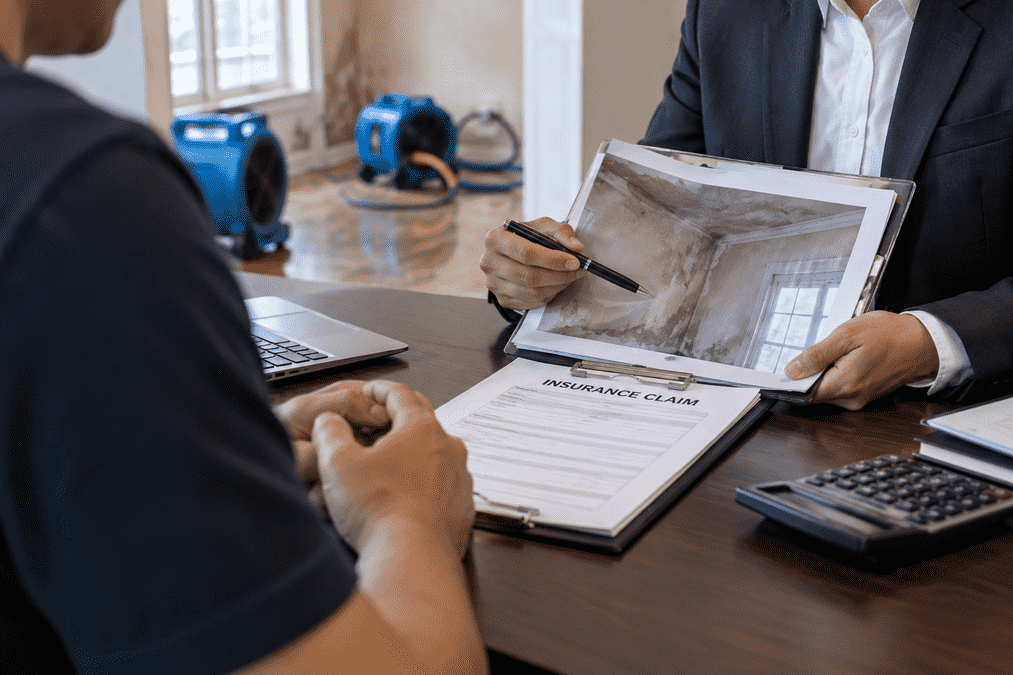
Common Losses Where Subrogation May Come Up
Subrogation may become part of a property damage claim when the loss may have been caused by another party, product, installation issue, or outside condition.
- ✓
Failed appliance supply lines
- ✓
Failed plumbing supply lines
- ✓
Defective fittings, valves, or plumbing components
- ✓
Water heater failures
- ✓
Contractor or installation-related damage
- ✓
Roof or building work that leads to later damage
- ✓
Fires involving appliances or electrical equipment
- ✓
Damage caused by a tenant, neighbor, vehicle, or nearby property
Does Subrogation Delay Restoration?
Subrogation does not always delay restoration. Emergency work may still be needed to prevent more damage, dry the structure, remove contamination, or make the property safer.
The key is to document conditions before they change:
- ✓
Photos of the source of loss
- ✓
Photos of affected rooms and materials
- ✓
Moisture readings
- ✓
Demolition records
- ✓
Equipment logs
- ✓
Damaged component preservation
- ✓
Repair notes and invoices
- ✓
Product, warranty, and contractor information
How Bee Dry Helps With Subrogation Documentation
Bee Dry Restoration documents property conditions and performs the restoration work. We do not determine legal liability, decide who is at fault, or make coverage decisions.
Photograph Source
Document Materials
Record Moisture
Track Mitigation Steps
Retain Failed Components
Prepare Documentation
Use Xactimate
Communicate With Adjuster
Restoration Support
Bee Dry follows applicable IICRC restoration standards, uses detailed project documentation, and can be hired for emergency mitigation, reconstruction, or both phases of the project.
Important Note
Bee Dry is an independent restoration contractor and remains independent from insurance carrier preferred vendor programs. Liability, coverage, and payment decisions are determined by the appropriate insurance or legal process.
What Should the Homeowner Do?
After a property loss where subrogation may come up, homeowners should focus on safety, reporting, and documentation.
Start with these steps:
- Report the loss promptly
- Explain what appears to have caused the damage
- Photograph the source and surrounding damage when safe
- Do not throw away a failed component without asking the carrier
- Keep receipts, invoices, warranties, and product information
- Save contractor names, repair records, and correspondence
- Ask the adjuster whether the failed item should be preserved
- Begin necessary mitigation to help prevent additional damage
This is especially important after water damage, plumbing failures, appliance leaks, water heater failures, electrical fires, storm-related damage, or contractor-related property damage.
Your 24/7 Restoration Services in Cleveland
At Bee Dry Restoration of Cleveland, we provide expert restoration services including fire damage restoration, water damage restoration, mold inspection, sewage cleanup, and more. Our skilled team delivers fast, reliable, and professional solutions to restore your property and your peace of mind with the highest standards of safety and quality.
- Mentor
- Painesville
- Willoughby
- Cleveland
- Eastlake
- Madison
- Perry
- Wickliffe
- Chardon
- Thompson
- Austinburg
- Geneva
- Grand River
- Fairport Harbor
- Kirtland
What Is Subrogation in a Property Insurance Claim?
Frequently Asked Questions
Usually, the insurance carrier handles its own recovery efforts after paying a covered claim, although every situation can vary.
Often, yes. Emergency mitigation should not automatically be delayed, but evidence should be documented and preserved when appropriate.
Yes, ask your carrier before disposing of it if the item may have caused the loss.
It may be possible in some claims if the carrier recovers money from the responsible party, but deductible recovery is not guaranteed. In Ohio, claim rules address proportional sharing of subrogation recovery with the first-party claimant unless the deductible has already been paid or recovered. (Ohio Laws)
No. Subrogation may come up in water damage, fire damage, appliance failures, contractor-related damage, plumbing failures, electrical incidents, and other property damage claims.
It may make later investigation harder. Ask the adjuster before discarding any item that may have caused the loss.
No. Bee Dry documents damage and performs restoration. Responsibility is determined through the insurance, investigation, expert, or legal process.
Need Help After a Property Damage Loss?
If you are dealing with water damage, fire damage, storm damage, sewage cleanup, mold concerns, or emergency mitigation, Bee Dry Restoration can help document the damage, perform needed restoration work, and coordinate with your adjuster during the claim process.
Call Bee Dry Restoration today at 440-970-1156 for 24/7 emergency service.
Important Note
This page is for general educational purposes only. Bee Dry Restoration does not provide legal advice, coverage opinions, liability determinations, or public adjusting services. Insurance coverage, subrogation rights, deductible recovery, liability, and payment decisions are determined by the insurance carrier, policy language, state law, claim facts, and other appropriate professionals.