Insurance Adjuster vs. Restoration Contractor
After water damage, fire damage, storm damage, mold, or sewage damage, knowing the difference between an insurance adjuster and a restoration contractor can help you make smarter decisions, avoid delays, and understand who is responsible for what. At Bee Dry Restoration of Cleveland, we help Northeast Ohio homeowners and businesses with the restoration side of the process, including emergency mitigation, water extraction, drying, cleanup, documentation, and repairs.
Two Different Roles. One Common Goal.
Both the insurance adjuster and restoration contractor inspect the damage, but they have different responsibilities. The adjuster reviews the claim for the insurance company. Bee Dry restores your property.
Insurance Adjuster
Reviews the Claim
- Works for the insurance company
- Reviews your policy, coverage, and exclusions
- Inspects the damage
- Evaluates the cause of loss
- Considers deductibles and limits
- Helps determine what may be covered
Restoration Contractor
Restores the Property
- Inspects and documents the damage
- Performs emergency mitigation
- Removes water and dries the structure
- Cleans and restores affected areas
- Provides moisture readings and drying logs
- Helps plan repairs and reconstruction
How the Process Typically Works
File the Claim
You contact your insurance company and receive a claim number.
Adjuster Reviews
The adjuster inspects the damage and reviews your policy.
Call Bee Dry
We perform emergency mitigation and document affected areas.
Restoration Work
Water extraction, drying, cleanup, and repairs.
Move Forward
With a clear plan and documented restoration work.
Water Damage After an Upstairs Leak
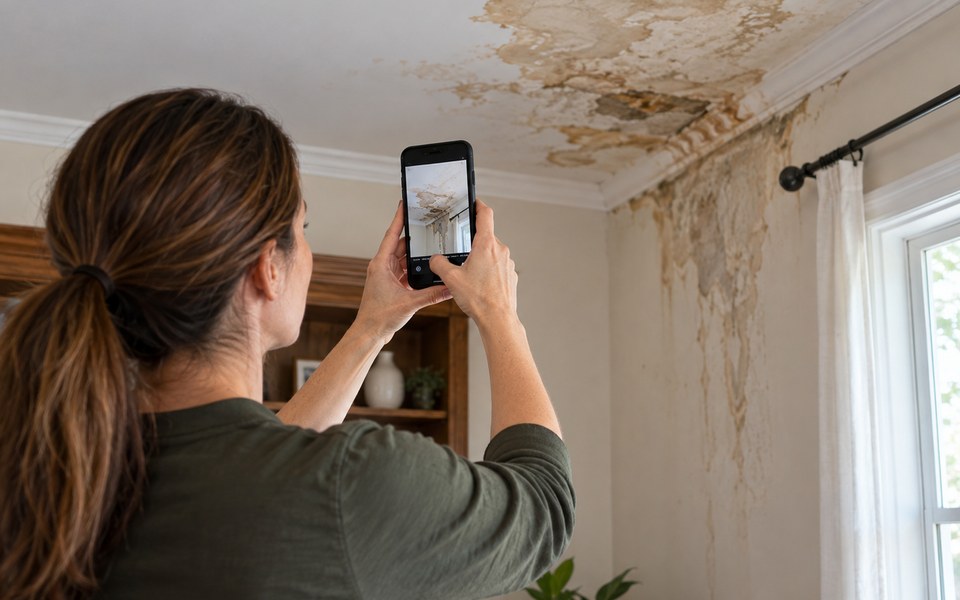
A homeowner notices water dripping from the ceiling below an upstairs bathroom. The insurance adjuster reviews the claim and visible damage, while Bee Dry inspects the affected areas, checks for hidden moisture, performs water extraction and drying, documents the work, and helps plan repairs.
When It May Be Covered
Coverage depends on your policy, but damage may commonly be reviewed when it is sudden, accidental, and not excluded.
- Burst pipe losses
- Sudden plumbing leaks
- Covered storm damage
- Fire and smoke damage
- Certain appliance leaks
- Interior water damage events
When It May Not Be Covered
Some damage may not be covered or may be limited depending on the policy, exclusions, or maintenance issues.
- Long-term or gradual leaks
- Lack of maintenance
- Wear and tear
- Flooding without flood insurance
- Sewer or sump pump backup without the right endorsement
- Mold beyond policy limits

What to Look for in Your Policy
Your declarations page can summarize major coverage details, but the full policy language, endorsements, exclusions, and limits also matter.
- Declarations page
- Dwelling coverage
- Personal property coverage
- Loss of use / additional living expenses
- Deductible
- Water damage language
- Water backup endorsement
- Sewer or drain backup endorsement
- Sump pump overflow endorsement
- Mold limits or endorsement
- Exclusions
- Limits and sublimits
- Duties after loss
- Proof of loss requirements
- Actual cash value
- Replacement cost value
What Bee Dry Can Communicate to the Adjuster
Bee Dry can share restoration-related information about the property, including affected areas, damaged materials, mitigation work, drying progress, and repair observations. This communication is focused on property conditions and restoration work, not coverage decisions.
What Bee Dry Can Share
- Affected areas
- Wet or damaged materials
- Moisture readings
- Drying progress
- Equipment used
- Damage photos
- Mitigation steps performed
- Safety or contamination concerns
- Scope information
- Repair observations
What Bee Dry Does Not Do
- Decide insurance coverage
- Approve or deny claims
- Guarantee payment
- Provide legal advice
- Issue coverage opinions
- Act as a public adjuster
- Determine what insurance pays
Common Misunderstandings About Adjusters and Restoration Contractors
After property damage, it is easy to confuse who handles the claim and who handles the restoration work. Understanding the difference helps homeowners know who to call, what to ask, and what to expect next.
Thinking the Adjuster Handles the Repairs
The adjuster reviews the claim. A restoration contractor performs mitigation, cleanup, drying, repair planning, and restoration work.
Waiting for Approval Before Protecting the Property
Emergency mitigation may be needed quickly to help reduce further damage. Water extraction, drying, and stabilization should not always wait.
Expecting the Contractor to Decide Coverage
Bee Dry can document damage and explain restoration needs, but we do not decide what is covered, approve claims, or determine insurance payment.
Not Documenting the Damage Clearly
Photos, moisture readings, drying logs, and notes can help show what was affected and what restoration steps were performed.
Confusing Mitigation With Final Repairs
Mitigation focuses on stopping the damage from getting worse. Repairs and reconstruction usually happen after the property is dry and the next steps are clear.
Not Asking the Right Questions
Homeowners should ask the adjuster about claim requirements and ask the restoration contractor about damage, drying, cleanup, and repair planning.
What Homeowners Should Ask
The best questions depend on who you are speaking with. The adjuster and restoration contractor play different roles, so each conversation should focus on the right topic.
- Ask the adjuster what documents are needed.
- Ask what your claim number is.
- Ask about your deductible and policy limits.
- Ask what areas are being reviewed.
- Ask Bee Dry what areas were affected.
- Ask what materials are wet or damaged.
- Ask what mitigation steps are needed first.
- Ask if drying equipment is needed.
- Ask how moisture readings will be documented.
- Ask what repairs may be needed after mitigation.
- Ask what information can be shared with the adjuster.
The adjuster reviews the claim. Bee Dry restores the property. Keeping those roles clear can make the process easier to manage.
What to Ask Your Insurance Company
When you file the claim, ask clear questions like:
- What is my claim number?
- Who is my assigned adjuster?
- What is my deductible?
- Are there special limits or sublimits?
- Does my policy include water backup coverage?
- Does my policy include mold coverage?
- Does my policy include Additional Living Expense?
- What documentation do you need from me?
- Can I start emergency mitigation?
- Should I save damaged materials or failed parts?
- How are ACV, RCV, and depreciation handled?
- Will my mortgage company be included on the check?
- What happens if the contractor scope is different from the insurance estimate?
Your 24/7 Restoration Services in Cleveland
At Bee Dry Restoration of Cleveland, we provide expert restoration services including fire damage restoration, water damage restoration, mold inspection, sewage cleanup, and more. Our skilled team delivers fast, reliable, and professional solutions to restore your property and your peace of mind with the highest standards of safety and quality.
- Mentor
- Painesville
- Willoughby
- Cleveland
- Eastlake
- Madison
- Perry
- Wickliffe
- Chardon
- Thompson
- Austinburg
- Geneva
- Grand River
- Fairport Harbor
- Kirtland
Why Choose Bee Dry Restoration of Cleveland?
Bee Dry Restoration of Cleveland helps homeowners and businesses in Northeast Ohio handle the restoration side of property damage claims. We know you are not just dealing with wet drywall, smoke damage, mold, sewage, or storm damage. You are also dealing with uncertainty.
What happens next? Who do you call? What should you photograph? What should you save? What should you avoid touching? What does the adjuster need? What does the contractor need?
Bee Dry helps answer the restoration side of those questions while helping protect the property, document the work, and move the restoration process forward.
How Bee Dry Helps
Our role is to restore the property, document affected areas, and help you understand what should happen next.
Insurance Adjuster vs. Restoration Contractor
Frequently Asked Questions
No. An insurance adjuster reviews the claim for the insurance company. A restoration contractor performs mitigation, cleanup, drying, documentation, and repairs.
An insurance adjuster may inspect the damage, review the policy, evaluate the cause of loss, consider deductibles and limits, and help the insurance company determine what may apply to the claim.
A restoration contractor inspects affected areas, performs emergency mitigation, removes water, dries the structure, cleans damage, documents conditions, and helps plan repairs or reconstruction.
Yes. Bee Dry can communicate about property conditions, affected materials, moisture readings, drying progress, mitigation work, and restoration scope. Bee Dry does not negotiate coverage as a public adjuster.
No. Bee Dry can explain restoration needs and document property damage, but the insurance company decides coverage based on the policy and claim investigation.
Differences can happen when hidden moisture or additional affected materials are discovered during mitigation. Bee Dry can document restoration findings and explain what was found from a property damage perspective.
Bee Dry helps with emergency mitigation, water extraction, drying, cleanup, mold remediation, sewage cleanup, fire and storm restoration, documentation, and repairs for homeowners and businesses in Northeast Ohio.
Call Bee Dry After Property Damage
If you are dealing with property damage and are unsure who does what, call Bee Dry Restoration of Cleveland. We can help you understand the difference between the insurance claim review and the restoration work, then guide you through the next practical steps.
Call Bee Dry Restoration of Cleveland today for emergency mitigation, cleanup, documentation, and restoration support in Northeast Ohio.
Important Note
Coverage varies by policy, carrier, endorsements, exclusions, cause of loss, deductible, limits, and claim determination. This page is for general educational purposes only. Bee Dry Restoration of Cleveland provides restoration services and documentation support, but does not act as an insurance company, public adjuster, attorney, or coverage decision maker.